Pizza Guides
The History of Pizza: From Naples to Your Door
Pizza traveled from the streets of Naples to nearly every corner of the world. Here is the short, fascinating story of how a humble flatbread conquered dinner.
Pizza feels timeless and universal, like it has always been here. But it has a specific, surprisingly recent story, one that begins as humble street food and ends up on tables in nearly every country on earth. Understanding where pizza came from makes every slice a little more interesting, and it explains why the best pizzas still honour a handful of simple principles. Here is how a flatbread became the world's favourite shared meal.
Ancient roots
Flatbreads with toppings are ancient. Many cultures around the Mediterranean and beyond ate some version of seasoned, baked flatbread for thousands of years, using them as edible plates or simple, portable meals. So the idea of bread plus toppings is older than recorded recipes. But pizza as we know it needed one more ingredient and one particular city to truly come together.
Humble beginnings in Naples
Pizza took its recognisable shape in Naples, Italy, in the eighteenth and nineteenth centuries. It was cheap, fast, and filling, sold to working people who needed an affordable meal they could eat quickly, often standing up or on the move. It was very much food for everyone, not a delicacy.
Tomatoes, brought to Europe from the Americas, were the missing piece. For a while many Europeans were suspicious of the tomato, but Neapolitans embraced it, and once the tomato met the flatbread, the classic pizza began to come together.
The pizza that became a legend
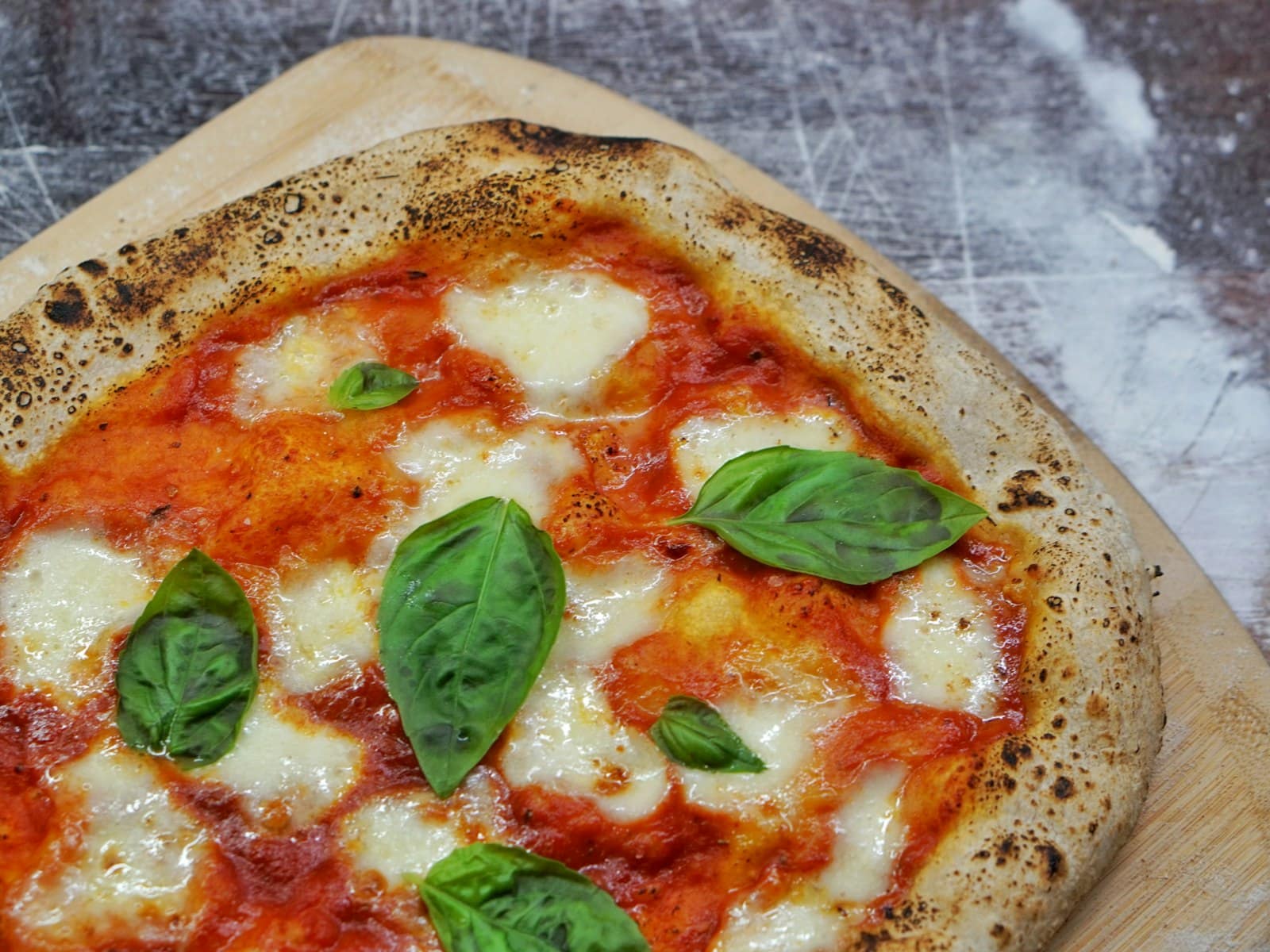
The most famous origin story is the Margherita. As the tale goes, a pizza topped with tomato, mozzarella, and basil, the red, white, and green of the Italian flag, was named in honour of a visiting queen. Whether every detail of the legend is exact or not, the Margherita became the template for the classic pizza: simple, balanced, and built on quality ingredients rather than a heap of them. It is still the benchmark we describe in what makes the best pizza.
Pizza started as food for people who could not afford to waste anything. That spirit of doing a lot with a little is still its soul.
Crossing the ocean
Waves of Italian immigrants carried pizza around the world, and especially to North America, in the late nineteenth and twentieth centuries. At first it was mostly found in Italian neighbourhoods, but it did not stay there. After the mid-twentieth century, pizza exploded in popularity and began to evolve. Regional styles emerged, each adapting the original idea to local tastes, ingredients, and ovens. Pizza stopped being only Neapolitan and became local everywhere it landed.
The age of variety
As pizza spread, it absorbed influences from every culture it met. New crust styles appeared, from cracker-thin to deep pan. New toppings arrived, and entirely new fusions were born, like the donair pizza we love in our own neighbourhoods. Read about that local creation in donair pizza, a local favourite.
- Naples: thin, soft, blistered crust, minimal high-quality toppings.
- North America: a spectrum from thin to deep pan, often topping-forward and generous.
- Everywhere else: endless local twists reflecting regional flavours and ingredients.
Pizza today
Today pizza is both a global product and a deeply local one. You can get it almost anywhere, yet the best version in any town tends to reflect that place. What unites the great ones across every style is respect for the fundamentals: good dough, honest sauce, real cheese, and balance. Everything else is creative freedom, and that freedom is exactly why pizza never gets boring.
Why the history still matters
Knowing where pizza came from is not just trivia. It is a reminder of what makes it great. The original pizzas were simple, balanced, and made from good ingredients because that was all there was. The fanciest modern pizza still cannot beat a perfect Margherita when the basics are right. That lesson, do the simple things excellently, is centuries old and still true.
How the oven shaped the pizza
You cannot tell the story of pizza without talking about the oven. The traditional wood-fired oven, blazing hot and radiating intense heat from all sides, is what made the classic Neapolitan pizza possible: a pie that bakes in a flash, with a crust that chars and blisters before the toppings can overcook. As pizza spread around the world, ovens changed, and the pizza changed with them. Different ovens encouraged different styles, from quick, thin pies to slow-baked, thick pan versions. The tool and the food evolved together, which is why heat remains one of the true fundamentals of great pizza to this day.
Pizza becomes a cultural icon
Somewhere along the way, pizza stopped being just a meal and became a symbol. It showed up in films, on television, at every birthday party and late-night study session, woven into the fabric of everyday life. That cultural status is part of why pizza feels so universal and so comforting; it carries memories as much as flavour. Few foods are as bound up with celebration, togetherness, and simple everyday joy, and that emotional weight travels with every box.
The return to quality and tradition
In recent decades there has been a quiet movement back toward the roots: long-fermented dough, quality ingredients, hot ovens, and balanced, restrained toppings. After years of bigger-is-better excess, many pizza lovers rediscovered that the original idea, done well, is genuinely hard to beat. That respect for the fundamentals is exactly what we try to honour, and it is the through-line that connects a centuries-old Neapolitan pie to the pizza arriving at your door tonight. For what those fundamentals actually are, see what makes the best pizza.
Pizza's story is still being written
It is tempting to treat pizza's history as finished, a neat arc from Naples to the world. But the story is still very much in progress. New styles continue to emerge, old ones get rediscovered and refined, and local creations like fusion pizzas add fresh chapters all the time. Every neighbourhood that puts its own spin on a pie is contributing to the ongoing history.
That is part of what makes pizza endlessly interesting. It is anchored by centuries-old principles, good dough, honest ingredients, real heat, yet open to constant reinvention. The pizza you order a decade from now will share its DNA with a Neapolitan pie from two hundred years ago, even as it reflects tastes and ideas that do not exist yet. You are not just eating a piece of history; you are part of where it goes next.
Frequently asked questions
Where was pizza invented?
Pizza as we recognise it developed in Naples, Italy, though flatbreads with toppings existed long before in many cultures.
What is the oldest classic pizza?
The Margherita, with tomato, mozzarella, and basil, is the iconic early pizza and remains the benchmark for balance.
Why did pizza become so popular worldwide?
It is affordable, endlessly adaptable, easy to share, and delicious. Those qualities translate across every culture and budget.
When did pizza arrive in North America?
It came with Italian immigrants and grew steadily, then surged in popularity in the mid-twentieth century, evolving into many regional styles.
Be part of the story. Order a pizza that carries centuries of tradition to your door.